
MURANO SEGUSO BARBINI TWIN PARADISE BIRDS Glass BLUE PINK Opalescent GOLD 14
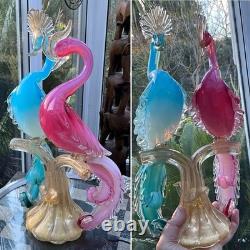
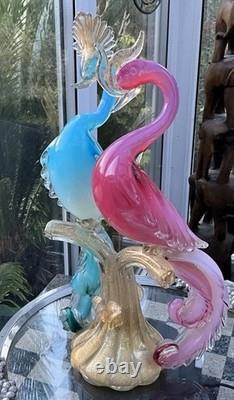
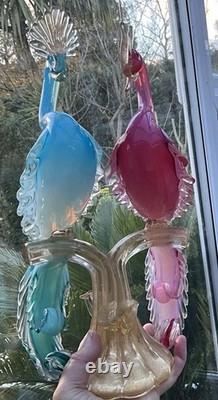
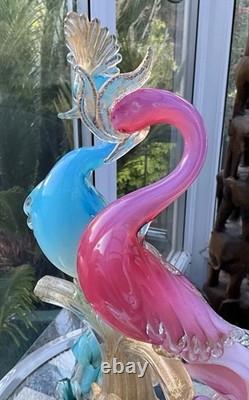
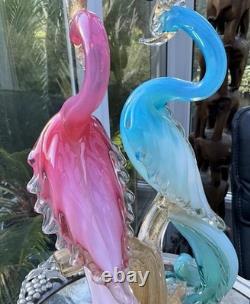
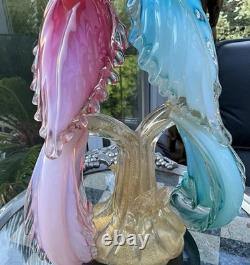
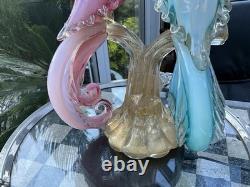
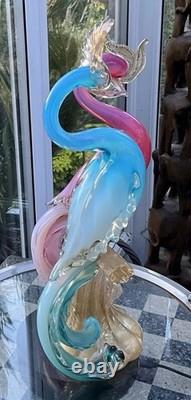
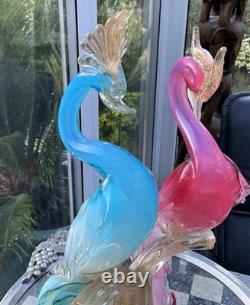
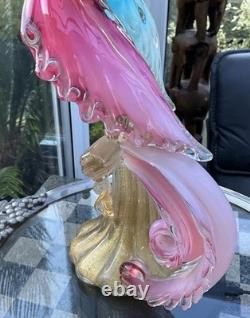
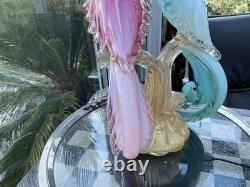
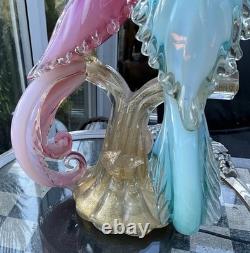
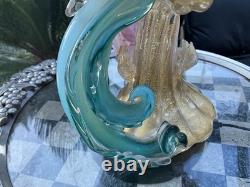
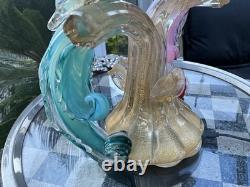
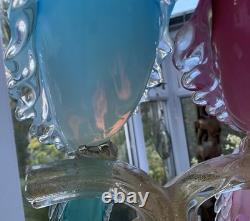
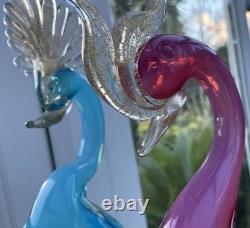
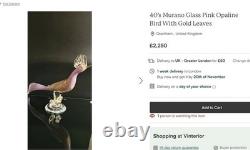
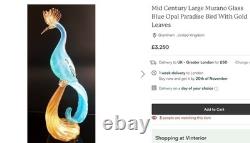
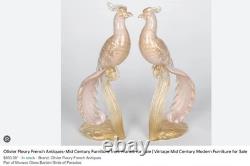

RARE LARGE MURANO SEGUSO ALFREDO BARBINI - TWIN BIRDS OF PARADISE - Glass ONE BLUE AND ONE PINK Opalescent Alabastro GOLD 14 2.7KG. Please also see my MURANO SEGUSO BARBINI TWIN PHEASANTS TO BE LISTED SHORTLY.
This listing is for a most stunningly created CENTREPIECE figurine, probably 1940's MURANO TWIN BIRDS OF PARADISE by SEGUSO ATT BARBINI (SEE RESEARCH NOTES BELOW) brilliant condition, with no damage. The Alfredo Barbini Murano Glass Blue Opal Paradise Bird With Gold Leaves is a stunning sculpture handcrafted in Venice, Italy.
Made from high-quality glass with a beautiful blue opalescent colour, with alabastro includsions (SEE RESEARCH NOTES BELOW) and intricate gold leaf details, (SEE RESEARCH NOTES BELOW), this unique piece showcases the artistry and craftsmanship of Murano glassmaking. The bird theme adds a whimsical and elegant touch to any space, making it a vintage and original decorative piece for those who appreciate fine art glass. A very collectible item which is only going to appreciate in value as time goes by. This is an extremely rare opportunity to own a piece of such high quality and standard of difficulty, in such immaculate condition. MEASUREMENTS: Height 14" x 8" width x 6 deep.CONDITION: Pristine Mint condition with no damage. Gold leaf inclusions in Murano glass, a technique called battuto d'oro or using polvere d'oro, involve embedding extremely thin gold or silver foil within glass, a hallmark invented in 15th-century Murano for mosaics, mirrors, and tableware, falling out of fashion but regaining popularity in the 19th century, and becoming iconic in mid-century designs like Barovier & Toso's Cordonato d'Oro (golden cord) with rope-like patterns or Graffito (scratched) effects, showcasing centuries of Venetian glass mastery. Opalescent Alabastro glass is a beautiful, milky, semi-opaque art glass, often in swirling pinks, whites, blues, and other colors, named for its resemblance to alabaster stone and opal; popular in Art Deco and Mid-Century modern pieces (like Murano's Seguso), it combines translucent opal glass with other colors for unique light effects, creating vibrant, glowing art glass beloved in collectibles and decor.
Appearance: Translucent, milky, with swirls and streaks of color, often white mixed with pink, blue, or peach. Light Play: Catches light beautifully, glowing with color, especially in daylight. Texture: Smooth, with a distinctive depth to its colors.
Alabaster Glass (American): Introduced by Frederick Carder at Steuben Glass Works, featuring an iridescent finish from stannous chloride. Murano Alabastro: Famous Venetian glass, especially by Archimede Seguso, known for vibrant pinks, blues, and whites in animal figures, vases, and bowls.
Art Deco Examples: Makers like Sabino, Lalique, and Jobling produced stunning opalescent pieces in bowls, figurines, and plates. How It's Made (General Process). Batch Mixing: Silica sand, soda ash, limestone, and minerals are melted with recycled glass and pigments.
Color Blending: Molten glass gathers are mixed on a table with forks and rollers to create swirling, variegated colors. Forming: Glass is shaped into objects like vases, bowls, or figures. Annealing: Evenly cooled in an oven (lehr) to prevent cracking, ensuring durability. "Alabastro" often refers to the milky, stone-like quality, while "Opalescent" describes the shimmering, multi-hued light effects, with many pieces combining both terms due to their similar appearance and creation methods, making them highly collectible. THE GREAT MURANO GLASS MASTERS: ALFREDO BARBINI.Murano's history is made by hundreds of talented and ingenious glass masters. Many of them attained prominence centuries ago, while others are still stunning the world with dazzling creations. Others have collaborated together to evolve the glass-making industry and bring it global fame, which it is still enjoying today.
Each and every one of them, however, has contributed invaluably to Murano's history and beauty, surprising admirers and collectors with new ideas, artistic boldness, and alluring designs. Such is the case of the Barbini family, who has been an important presence in Murano's history since ages ago, and is still present in today's picture. Alfredo Barbini's story, however, starts many centuries later. Born in 1912 in Murano, he quickly became known as a very skillful glass master. Beginning his career with one of Murano's most famous furnaces, Alfredo started working at Ferro Toso's factory at the tender age of 13. After 17 years of working for Toso, he left the furnace and joined the Cristalleria di Venezia e Murano to become its principal master glassblower. During that time, he showed an incredibletalent in designing and crafting bold and beautiful glass pieces. In 1932, he joined Zecchin & Martinuzzi, a furnace that allowed his creativity to blossom and where he created his most impressive designs over the next three years. This last furnace provided him with more artistic liberties than the previous ones, that focused much more on the technical aspects of glass craftsmanship. Unfortunately, Zecchin & Martinuzzi eventually closed, and Barbini moved on to work for Seguso Vetri d'Arte for a short period, ending up later on at Vetreria Artistica Muranese Società Anonima until 1944.After World War II Barbini went back to working with Seguso and Martinuzzi independently, gaining more and more recognition as the famous master glassblower and designer. His strong aesthetics and vivid imagination allowed him to mold his designs to satisfy the preferences of his colleagues and patrons with no problem at all. His experience expanded even more after working for two other great masters, Luigi Scarpa Croce and Salviati.
By 1946, he had become artistic director and business associate of Gino Cenedese & C. During this time he broadened his mastery in glass sculptures and different chromatic effects such as the "vetro fumato" or smoky glass. In 1948, during Venice's Biennale and under Cenedese company name, he presented an incredible collection of decorative art glass in "corroso" style mimicking corroded surface effects. In 1950 with Salviati's economic help, Alfredo Barbini managed to open his own firm, Vetreria Alfredo Barbini. From this year on and until 1961, Barbini was an important presence in many Venice Biennale art exhibitions. His interest turned to ore essential and minimal forms, such as the instantly-famous fish and tulip artworks he submitted for the Venice Biennale in 1960. In later years, his works were also characterized by a series of small and fine incisions engraved on the surface of each glass object, decorating the surface of delicate vases and other art glass pieces.One of the techniques he perfected and specialized in throughout the years was the Massello technique. This technique is based on stretching hot glass and molding it into a certain shape, allowing the piece to take any form without having to use a glass blowing technique. Another signature style of his was the Sommerso technique. He perfected the way in which thick colored layers of glass were superimposed over each other, fusing each layer so brilliantly that the joining lines seemed non-existent; they were seamlessly turning into each other creating brilliant reflections and amazing color combinations. If you need more photos or information please message me...
I try to describe all the items as accurately and as honestly as possible, and I always include photos or scans of the actual items. My items are usually vintage or antique, very rarely new, and condition will sometimes reflect this with minor marks, wear on gilding etc. Anything major such as cracks chips or major loss of gilding etc will be pointed out in the description and shown on the photos. If you are still unsure as to the condition etc.
I do my best to research the item and its history and pass that information on to my customers, you can google items and find the same information I do. Vintage or pre-owned items will often show some signs of wear due to their age, and there may be something I overlooked.
Any condition outside normal vintage wear, like chips or cracks or serious defaults, will be noted. Also take a look at my other items for more Asian, cloisonné, Glass, Antiques, Silver, Bronze, Copper, China, Horn, and many other collectables.